
In a decentralized world, knowledge must travel faster than borders.
Researching the Technologies, Models, and Mindsets That Will Shape Tomorrow’s Classrooms—Globally and Locally
At MGX Research Center, we explore how emerging technologies are transforming the landscape of education, reimagining how knowledge is delivered, accessed, and internalized across all stages of learning. Our work in Educational Technology (EdTech) focuses on the intersection of pedagogy, innovation, and equity—studying how digital tools can enhance learning outcomes, bridge access gaps, and prepare learners for the demands of the future.
In an era where education must adapt to disruption, decentralization, and demographic change, we are committed to generating evidence-based insights, context-aware frameworks, and scalable solutions that inform the evolution of education systems—from rural classrooms to global e-learning platforms.
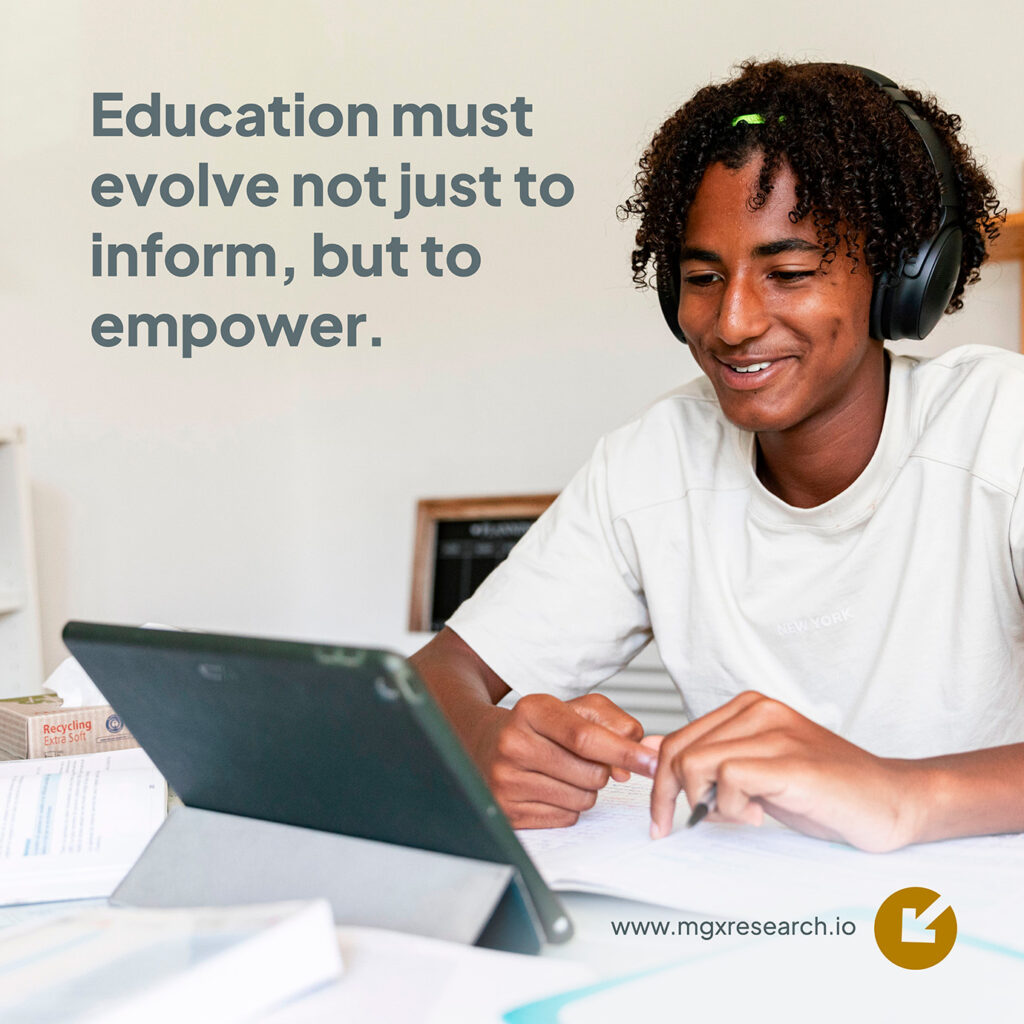
Research Objectives
We explore how digital tools impact learning, promote equity, and prepare students for the future—while shaping ethical and effective EdTech practices.
• To evaluate the impact of digital learning tools on cognitive, behavioral, and academic outcomes
• To explore new learning models enabled by AI, VR, gamification, and adaptive technologies
• To assess digital equity and access in underserved communities
• To contribute to national and global policy on EdTech integration, standards, and ethics
• To develop frameworks that align education with the skills and competencies of the future workforce
Key Research Domains
1. Adaptive & Personalized Learning Systems
We research how AI-powered platforms can deliver customized learning paths tailored to individual learners’ strengths, weaknesses, and pace. Our studies examine the effectiveness of adaptive learning in both formal and non-formal education settings.
2. Immersive Learning: AR/VR/XR in Education
We explore the use of immersive technologies—such as Virtual Reality (VR), Augmented Reality (AR), and Extended Reality (XR)—in enhancing experiential learning in STEM, medicine, history, and technical training. Our research investigates both pedagogical impact and implementation scalability.
3. Digital Literacy, Access & Inclusion
We examine barriers to access in low-resource environments, developing strategies for device affordability, local content development, offline learning solutions, and digital literacy curricula that empower learners and educators across socio-economic backgrounds.

4. Gamification & Learning Engagement Models
Our research investigates the cognitive science behind game-based learning and motivation. We study how gamified platforms improve attention, retention, and learner engagement—particularly among children and youth.
5. Workforce Readiness & Future Skills Frameworks
We map the evolving skills required for the 21st-century economy, assessing how education systems can integrate critical thinking, digital fluency, entrepreneurship, and AI-era competencies through curriculum innovation and EdTech platforms.
Ongoing Investigations & Pilots
Exploring how AI tutors and chatbot assistants can support real students in secondary schools, making learning more interactive and responsive to individual needs.
Designing VR learning experiences that bring hands-on vocational and technical training to young people across West Africa.
Creating practical EdTech access models for rural learners using solar-powered devices and mesh networks—so no child is left behind due to geography.
Partnering to build digital credentialing systems that allow learners to earn micro-certifications recognized across borders, unlocking global opportunities.
Using data insights to understand how mobile-first digital schools are transforming learning outcomes in diverse global communities.